Sunday, September 28, 2014

Tactical nuclear weapons in South Asia

Currently, Pakistan is deeply embroiled in its internal economic and security problems, and there are possibilities of India’s provocation over the issue of Kashmir
The threat of nuclear terrorism in South Asia has resumed a greater profile as India and Pakistan continue to maintain a large number of nuclear facilities. The recent hostile attitude of Mr Modi’s government towards Pakistan once again put the process of peace and stability in the region at a spike. India has developed various types of tactical nuclear weapons that have threatened the security of the region. The test of Pakistan’s ballistic missile, Nasr, capable of carrying a nuclear warhead, and India’s ballistic missile, Prahaar and others, complicated nuclear weapons race in South Asia. India’s tactical nuclear weapons are more dangerous than Pakistan’s. Indian nuclear missiles like Agni-I, Agni-III, VI and V present a bigger threat to the national security of the subcontinent. India has also launched various military and surveillance satellites to enter into an anti-satellite weapons and ballistic missile defence race with China.

India’s ballistic missile Agni-VI’s range is believed to be 10,000 kilometres. This missile can target North Korea, Japan, China and Russia, while its new ballistic missile range is more than 15,000 kilometres, which can target North America. There are speculations in the international press that India is planning to embark on a covert uranium enrichment project to produce thermonuclear weapons. India is desperately seeking modern nuclear technologies to counter the threat of Pakistan’s tactical nuclear weapons. The country has signed nuclear deals with France, Mongolia, the US, Namibia and Kazakhstan.

The two states operate in a strategically competitive triangle that includes China. India is also a bigger challenge for China by developing nuclear missiles to achieve a strategic deterrent against that country. As a strong state, India has adopted a very hostile attitude and continues to create more difficulties for Pakistan and other neighbours. The 2008 Mumbai and the Line of Control incidents prompted deep distrust between the two states. In June 2014, Indian Prime Minister Narendra Modi issued a stern warning to Pakistan: “I had told you on television that this is not Manmohan Singh’s government, it is Narendra Modi’s government. If you do something, we will also do but we cannot sit quiet.”

Indian Law Minister Ravi Shankar Prasad criticised Pakistan and its support to extremist groups across the border. Mr Ravi Shankar demanded the resignation of Prime Minister Nawaz Sharif. However, Pakistan-based terrorist groups used the same language against Mr Modi’s government. In its video message, an extremist group, Ansar-ul-Tawheed fi Belad Hind (Brotherhood for Monotheism in India) warned Mr Modi of retaliation for the Gujarat massacre. Moreover, India cancelled its talks with Pakistan on the pretext that Pakistan’s High Commissioner in Delhi had met Kashmiri Hurriyet leaders. The suspension of talks set off alarm bells in the US and China that are stakeholders in the relationship between both the states.

When Pakistani High Commissioner to India Mr Abdul Basit met a Kashmiri separatist leader without the consent of India, it further inflamed Mr Modi’s colleagues in parliament. During his Kashmir visit, Prime Minister Modi made a strong statement against Pakistan. In his Laddakh visit, Mr Modi said the Indian armed forces were suffering more casualties from terrorism than from any war. Mr Modi said that Pakistan continued to support a proxy war against India. Moreover, various politicians in India have issued irresponsible statements against Pakistan, creating a hostile environment in the region. In military circles, India’s new army chief, Dalbir Singh Suhag, also issued a stern warning to Pakistan and said that Pakistan is unable to intercept cross-border infiltration.

Experts of tactical nuclear weapons in South Asia understand that the ruction between the two states could pave the way for a nuclear crisis in the region. We understand that India and Pakistan are deeply concerned over the threat of nuclear terrorism or the use of nuclear improvised explosive devices but there are reports that they have adopted some professional security measures recently that may help prevent terrorists gaining access to their installations. Currently, Pakistan is deeply embroiled in its internal economic and security problems, and there are possibilities of India’s provocation over the issue of Kashmir. In these circumstances, extremist groups in Pakistan could start nuclear terrorism in South Asia.

The future of the nuclear weapons race between Pakistan and India is precarious as both states continue to develop modern tactical nuclear weapons. India has established its military bases in Afghanistan. On October 5, 2013, the foreign secretary of Pakistan said, “We have appraised India of our concerns on terrorism. If India has apprehensions about Pakistan then we have more apprehensions than India,” he said.

As the situation is going to deteriorate in the region, India and Pakistan need to resume talks on all issues including the Line of Control and tactical nuclear weapons. They need to work with each other on these issues that could spark an abrupt nuclear war in South Asia. Notwithstanding all efforts of the international community to help secure the nuclear weapons of both states, and as nuclear facilities and infrastructure have grown, there are concerns that security measures may not be sufficient to protect their nuclear and biological installations. We hope that the involvement of the international community, particularly the US and China, will help to professionalise the security measures of their nuclear and biological weapons. These efforts are considered to be more effective if they also strengthen the mechanism of cooperation. Their cooperation against non-state actors or extremist groups trying to gain access to radiological and nuclear weapons might help their nuclear forces in building an effective security infrastructure around their nuclear installations.
Musa Khan Jalalzai

The writer is the author of Punjabi Taliban and
can be reached at
zai.musakhan222@gmail.com

Wednesday, September 24, 2014

Ghani 'seen moving quickly to sign pact on foreign forces' in Afghanistan

Afghan president-elect Ashraf Ghani Ahmadzai is seen before speaking at an event in Kabul September 22, 2014. REUTERS/Omar Sobhani Afghan president-elect Ashraf Ghani Ahmadzai is seen before speaking at an event in Kabul September 22, 2014. CREDIT: REUTERS/OMAR SOBHANI
(Reuters) - Afghanistan's next president, Ashraf Ghani, is expected to sign legal documents within 24 hours of taking office next week allowing foreign troops to stay in his country beyond 2014, a senior NATO diplomat said on Tuesday.
NATO plans to end combat operations in Afghanistan at the end of this year and to leave a smaller training and advisory force in the country from next year to assist Afghan security forces in their fight against a resurgent Taliban insurgency.
But those plans were called into question first by outgoing President Hamid Karzai's refusal to sign documents establishing a legal basis for U.S. and other NATO troops to stay on and then by a long deadlock over the election of a new president amid allegations of fraud.
Ghani, a former finance minister, was named president-elect on Sunday after he signed a deal to share power with his opponent, ending months of turmoil and removing an obstacle to the signing of a bilateral security agreement (BSA) with the United States and a "status of forces agreement" (SOFA) with NATO.
"Ghani ... will be inaugurated next Monday, the 29th, and we anticipate that within about 24 hours of inauguration he will sign the BSA and we hope the SOFA as well," the senior NATO diplomat said.
"So that we would potentially next Tuesday be in a position where all the pieces have fallen in place for NATO to do its post-2014 mission," he said, speaking to reporters on condition of anonymity.
The NATO-led International Security Assistance Force has around 41,000 troops in Afghanistan, nearly three-quarters of them American.
From next year, about 12,000 foreign troops, including about 8,000 Americans, are likely to stay on as part of a NATO-led training and advisory mission while some 1,800 Americans will conduct counter-terrorism missions.
NATO diplomats had said that if the deadlock over the Afghan election persisted into October, NATO could be forced to start pulling out all of its troops from Afghanistan because of the risk they would not have the legal certainty to continue operating there beyond the end of this year.
The United States intervened in Afghanistan to deny al Qaeda a sanctuary after the Sept. 11, 2001, attacks. NATO -- the North Atlantic Treaty Organization -- took a peacekeeping role in Kabul in 2003, gradually extending it throughout the country.
(Reporting by Adrian Croft; Editing by Janet Lawrence,Credit: Reuters)

Thursday, September 18, 2014

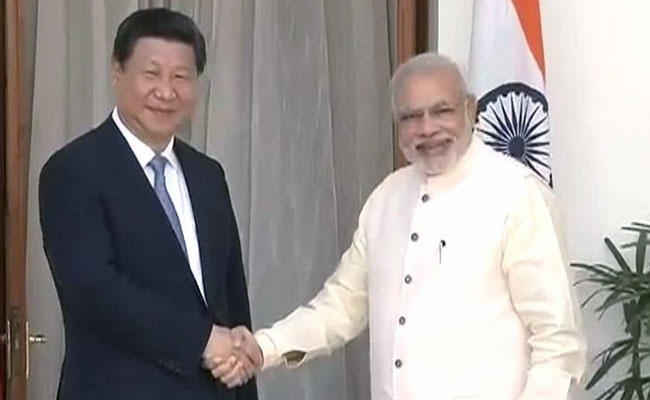
1,000 Chinese troops enter India while Modi, Xi talk business

Nearly 1,000 Chinese soldiers moved inside the Line of Actual Control in Jammu and Kashmir's Ladakh region, and refused to go back.

PM Modi, Chinese President Xi Talk Longer Than Expected: 10 DevelopmentsPrime Minister Narendra Modi and Chinese President Xi Jinping
NEW DELHI (IANS): Even as visiting Chinese President Xi Jinping and Prime Minister Narendra Modi discuss ways to strengthen Sino-Indian economic and cultural relations between the two Asian giants, border tensions heightened as Chinese and Indian troops were involved in a face-off along their border in the Ladakh region.
Quoting army sources, IANS reported that around nearly 1,000 Chinese soldiers moved inside the Line of Actual Control (LAC) in Jammu and Kashmir's Ladakh region, and refused to go back.
Nearly 1,000 Chinese troops crossed about five km into Indian territory Wednesday in Ladakh's Chumar sector, even as the troops of both sides held a flag meeting at the brigadier-level in Chushul.
In retaliation, the Indian Army has rushed three battalions to the LAC in the sector.
Indian officials said Chinese soldiers had entered Indian territory and appeared to be building a road in the region.
Ministry of External Affairs spokesman Syed Akbaruddin said Narendra Modi raised the issue with Xi Jinping during their meeting in Ahmedabad Wednesday.
"When leaders of important countries like India and China meet at summit level, these are occasions for discussing substance. So, I can assure you that process has already started. Yesterday, the issues of substance that you are referring to have already been raised at the highest level. 
"Today, there are several opportunities for discussion and all issues of a substantive nature, including the recent events that you are referring to, will be addressed. I can assure you that we will tell you the outcome once those discussions are done," Akbaruddin said, to a question on the incursion.
He said that "India and China have a very broad-based relationship". 
"We are focused on multiple areas of cooperation and we will continue to pursue those areas of cooperation too. I will give you the outcomes of these once the detailed discussions are completed today. But, again let me assure you with all sincerity these issues have been raised and issues of concern including the recent events will also continue to be discussed today," he added.
The Chinese president began a three-day visit to India Wednesday with a six-hour visit to Ahmedabad where Modi took Xi around the Sabarmati Ashram and later they strolled down the Sabarmati riverfront.

Sonali Bendre’s brother dies in a road accident

by India Newzstreet 
Bollywood actress Sonali Bendre’s brother and uncle died in a road accident near Mulabaligi in Karnataka.

New Apple devices include default kill switch

Apple Chief Executive Officer (CEO) Tim Cook speaks during an Apple event to announce the iPhone 6 and the iPhone 6 Plus at the Flint Center in Cupertino, California, September 9, 2014. REUTERS/Stephen Lam
Apple Chief Executive Officer (CEO) Tim Cook speaks during an Apple event to announce the iPhone 6 and the iPhone 6 Plus at the Flint Center in Cupertino, California, September 9, 2014.
CREDIT: REUTERS/STEPHEN LAM
(Reuters) - New Apple Inc phones include a theft deterrent system that enables users to lock their devices and wipe them clean of data if stolen, a victory for regulators who have long pushed the telecommunications industry to do more to stem theft.
The tool, known as a kill switch, will be standard on Apple's new iPhone 6 and iPhone 6 Plus devices and can be installed on previous models of iPhones starting Wednesday, according to an announcement from the office of New York Attorney General Eric Schneiderman.
Schneiderman has long fought alongside New York District Attorney George Gascón to convince device manufacturers to include the kill switch as a default setting on their devices.
"This is a game changer,” said Gascón. "This is a major development that will change behavior on the street and eventually turn around this violent epidemic."
The announcement marks the first time a kill switch is present as a default option on the iPhone.
In April, Apple was among 10 device makers to sign a voluntary agreement to make the feature available on new smartphones.
In 2012, 1.6 million Americans were victimized for their smartphones, according to Schneiderman's office.
(Reporting by Marina Lopes; Editing by James Dalgleish)

Amazon expands Kindle lineup, boosts price of basic e-reader

BY JENNIFER SABA AND DEEPA SEETHARAMAN
New Amazon Kindle Fire HDX 8.9 Tablets are displayed during a launch event in New York September 17, 2014.
CREDIT: REUTERS/BRENDAN MCDERMID
(Reuters) - Amazon.com Inc ramped up its push into hardware on Wednesday with the debut of six new or upgraded devices, including a high-end $199 e-reader called the Kindle Voyage and its cheapest-ever touch-screen tablet.
The No. 1 U.S. online retailer also revamped its basic Kindle e-reader to include a touch screen. It will cost $79, about 15 percent more than the current basic model.
Other new devices unveiled on Wednesday are a $99 Kindle Fire HD tablet, which includes a smaller, six-inch screen as well as a tablet designed for kids that starts at $149. Amazon also upgraded its 7-inch and 8.9 inch Fire tablets.
All the upgraded and new devices start shipping in October.
The expanding Kindle lineup underscores Chief Executive Jeff Bezos' commitment to developing devices as a way to retain users and bolster its core business of retail and shopping.
This year alone, Amazon has launched a set-top box, a grocery ordering wand and a Fire smart phone, which debuted in July to lackluster reviews.
Amazon, which entered the hardware sector with the 2007 launch of the Kindle, has adopted a strategy of selling the devices at cost, and it profits when users buy content or goods.
It has been investing heavily in content, inking a deal this year to stream some HBO shows including "The Sopranos" and "The Wire" to members of its Prime subscription program.
"The vast majority of people are still using the tablets," David Limp, vice president of devices for Amazon, said during a briefing with reporters in New York.
Executives touted the Kindle Voyage as the thinnest device Amazon has ever made. The company hopes heavy readers might adopt the device, which more closely mimic a paper book.
The $79 Kindle is crucial to attract new users, particularly in markets like China, Japan and Germany, where e-readers are starting to gain traction, executives said.
(Writing by Deepa Seetharaman; Editing by Ken Wills)

Can solar power save South Asia?

Emily Cadei, OZY 
solar
In 2010, Shazia Khan had a bright idea, literally. That's when this Pakistani-American, born and raised in upstate New York, launched the nonprofit EcoEnergyFinance, based in Karachi, Pakistan.

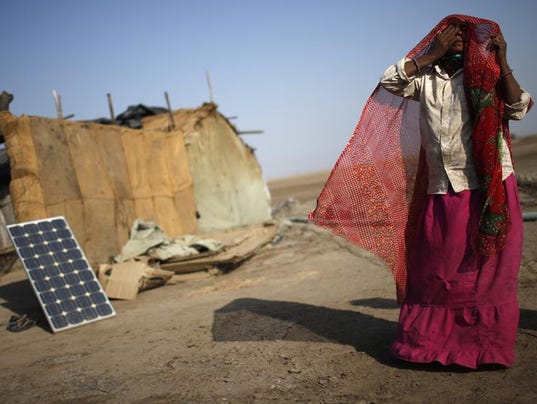
Today, EcoEnergy is out in the villages of Pakistan's Sindh Province, going where no electricity line has gone before. It sells solar lanterns that charge themselves under the baking South Asian sun, and then provide eight to 16 hours of electricity. Solar could well help fill the subcontinent's gaping energy needs. It draws on as many as 300 days of sunshine a year, while circumventing the need for huge infrastructure projects to get electricity where it's needed.

"We're focused on the rural poor because … the Pakistani government knows there is an energy crisis in Pakistan, but whenever they take any sort of policy measures to address this problem, they really don't talk about the rural poor at all," says Khan, formerly an environmental lawyer at the World Bank. "They're focused on setting up these really big power plants."

South Asia's needs are crushingly obvious. Rolling blackouts in India plunged 700 million people into darkness for two days in late July 2012, a jolting reminder that amid talk of South Asia's economic miracles, energy remains a mammoth Achilles' heel. South Asia's energy resources just can't keep up with its booming population and economy.

The regular sunshine amounts to a huge underutilized resource, as solar technology improves and costs fall. Potentially it could cut India's and Pakistan's reliance on foreign coal, gas and oil.

Most transformative: The mechanics of solar power make it fairly simple to deliver "off-grid" and avoid the limitations of India's and Pakistan's abysmal energy infrastructure. Solar could bring electricity to the hundreds of millions of rural poor who lack access, in the same way that mobile phones allowed millions of people to leapfrog the expensive infrastructure of the landline.

Today, roughly one-third of Indians rely on kerosene, dung or wood for most energy needs. Next door in Pakistan, it's worse — roughly 40 percent of its 180 million people have no electricity. The financial and physical state of the electrical grids is worse than decrepit. Energy theft is routine in both countries, creating mounting piles of utility debt that make it hard to keep the lights on, let alone improve or expand power lines.

At the end of 2012, Pakistani's energy-industry debt topped $9 billion, according to The Economist. "It's one unholy mess," says Michael Kugelman, an expert on South Asia energy issues at the Wilson Center think tank in D.C.

Powering up solar, though, raises its own set of issues, including creating incentives for investment in an industry with high upfront costs and low initial returns. "It is very much a long-term investment and not something that can address the immediate energy crisis in Pakistan or the insatiable energy thirst in India," Kugelman says. The greatest hope for capitalizing on solar energy's potential lies with innovative small-scale projects that can connect people to electricity for the very first time, like EcoEnergyFinance.

The company recently received a grant to pilot a pay-as-you-go program for the lanterns via cell phone SIM cards, rather than collecting monthly installment payments, village by village. Another grant will help set up solar-powered energy hubs in villages, where residents can come to power their cell phones and other electronic devices.

EcoEnergyFinance aims to become cash-flow positive, so it can reinvest income and scale up operations.

"Solar energy is a very fundamentally easy thing to put into place," says Kugelman. It just takes solar panels and a few other pieces of equipment. And there's appeal for entrepreneurs and startups to work in communities that have never had electricity. "You're not competing with other industries, the oil industry, the gas industry," he says.

In India, Dr. Arunabha Ghosh, the CEO of the Council on Energy, Environment and Water, a Mumbai-based nonprofit research institute, says his organization has counted 250 companies producing off-grid energy. Most use solar, and most sell individual home systems. Still, more companies are now building "microgrids" — clusters of solar panels connecting anywhere from 20 to 100 households. Some are using the the same pay-as-you-go model that Khan's nonprofit is experimenting with in Pakistan, Ghosh says.

Though the industry is fledgling, political leaders have begun to put money and political capital behind solar. In May, Pakistan's prime minister, Nawaz Sharif, inaugurated the country's first solar power park, with aims of producing 1,000 megawatts of energy by 2016. It's one of the largest in the world. India has an even bigger solar facility in the works, though environmental concerns may slow the project.

According to Ghosh, solar energy in India has grown a hundred-fold, from almost nothing to 2.6 gigawatts in installed capacity in the last four years. That's still just a fraction of the total 300 gigawatts of installed electrical capacity. Ghosh thinks that with the right policies, however, solar and other renewables could grow to make up 15 percent of of India's electrical capacity in the next 15 to 20 years.

New Indian Prime Minister Narendra Modi is also a solar enthusiast, after successfully launching several projects when he was chief minister of the state of Gujarat. Solar energy will be central to achieving his lofty energy promises, including one light bulb in every Indian household by 2019.

Big projects are still shackled by a lack of financing options and know-how necessary to attract big private investors and scale up solar energy use. But that's not stopping pioneers like Shazia Khan. And Ghosh says it's projects like hers that will embed solar power in the region's energy future. In the same way people in rural communities around the globe have come to rely on cell phones for everyday life, he predicts that solar energy, too, will become "indispensable."

Ozy.com is a USA TODAY content partner providing general news, commentary and coverage from around the Web. Its content is produced independently of USA TODAY.
Courtsy by USA TODAY.

Wednesday, September 10, 2014

Pakistani woman embraced by Islamic State seeks to drop US legal appeal

BY DAVID INGRAM
An Aafia Siddiqui supporter carries silk roses next to a poster during a celebration to mark Siddiqui's 41st birthday in Karachi March 2, 2014. REUTERS/Akhtar Soomro/Files
An Aafia Siddiqui supporter carries silk roses next to a poster during a celebration to mark Siddiqui's 41st birthday in Karachi March 2, 2014.
CREDIT: REUTERS/AKHTAR SOOMRO/FILES
(Reuters) - A Pakistan-born neuroscientist has become a rallying cry for militant groups demanding her release from a U.S. prison. But in a little-noticed move she is trying to abandon her legal fight for freedom, saying the U.S. court system is unjust.
Islamic militants in Syria, Algeria, Afghanistan and Pakistan have made Aafia Siddiqui's release a condition for freeing certain foreign hostages. Islamic State, for example, proposed swapping American journalist James Foley for her, but he was executed after their demands, which also included an end to U.S. airstrikes in Iraq, were not met.
A 42-year-old mother of three with degrees from the Massachusetts Institute of Technology and Brandeis University, Siddiqui is serving an 86-year sentence in a prison medical center in Texas. A jury in 2010 convicted her of attempting to shoot and kill a group of FBI agents, U.S. soldiers and interpreters who were about to interrogate her for alleged links to al Qaeda.
Siddiqui, who during her trial interrupted proceedings repeatedly and at times was removed from the courtroom, wrote U.S. District Judge Richard Berman in Manhattan on July 2 seeking to end her most recent appeal.
"I refuse to participate in this system of total injustice that has punished and tortured me repeatedly, and continues to do so, without my having committed a crime," she wrote.
Siddiqui said she wanted to be sent home to Pakistan through diplomacy, not through the legal system. But her lawyer Robert Boyle told the judge he was concerned she did not fully understand that as a consequence of her request she might not have another opportunity to challenge her conviction.
U.S. prosecutors were scheduled to respond to Siddiqui's letter with their own letter by late on Wednesday.
Siddiqui was likely unaware of the attempt by Islamic State to free her in a prisoner swap for Foley, Boyle told Reuters. Federal Medical Center Carswell severely restricts her contact with the outside world, he said.
Siddiqui already lost one appeal. In 2012, an appeals court rejected arguments that her trial was unfair and upheld her conviction.
Her latest appeal, filed in May, argues that Siddiqui received an unfair trial because she was not allowed to fire defense lawyers who were paid by the Pakistan government, and that U.S. prosecutors failed to turn over important evidence.
WIDESPREAD KIDNAPPINGS
In 2003, Siddiqui was wanted by the FBI for questioning for possible ties to al Qaeda and was detained by Pakistani authorities, according to U.S. media reports at the time.
U.S. officials alleged that when the Afghan police captured Siddiqui in July 2008, she was carrying two pounds (900 grams) of sodium cyanide, which releases a highly toxic gas, notes that referred to a mass casualty attack, and a list of U.S. landmarks.
Siddiqui was never charged with links to terrorism. The FBI agents, U.S. soldiers and interpreters said that as they were about to interrogate her at an Afghan police compound in Ghazni, Afghanistan, she grabbed a rifle and began shooting at them. None of them were wounded, but Siddiqui was shot in the abdomen when they returned fire.
Siddiqui's family says she was raped and tortured at the U.S. military's Bagram Air Base in Afghanistan. U.S. officials have said they found no evidence of that, but Islamist militant groups say her case is an example of the worst excesses of the U.S. war on terror.
At her trial, Siddiqui's lawyer urged an acquittal because there was no evidence the rifle had been fired. No bullets, shell casings or bullet debris were recovered and no bullet holes were detected, the lawyer said.
Prosecutors cited testimony from witnesses and said the witnesses had no motive to lie.
Freeing Siddiqui or winning her repatriation to Pakistan has at a times been a popular cause in her homeland, where her trial was seen as unfair. In 2011, Pakistan's Taliban claimed responsibility for the kidnapping of a Swiss couple and said they could be freed if Siddiqui were released. [ID:nL5N0F23US]
In Afghanistan, the Taliban asked for her release as part of a deal to free U.S. Army Sergeant Bowe Bergdahl. In May, Bergdahl was released in a prisoner swap that freed five Taliban leaders held at the prison at Guantanamo Bay, Cuba.
Calls for Siddiqui's release were made by al Qaeda-linked kidnappers in Algeria in January 2013. A few months later, two Czech women who had been kidnapped in Pakistan appeared in a video demanding the scientist's freedom in return for their release. It was not clear who was holding them.
(Additional reporting by Alistair Bell; Editing by Noeleen Walder and Ross Colvin, Courtsy by Reuters)

Tuesday, September 2, 2014

Sri Lanka court gives green light to deport Pakistani asylum seekers

COLOMBO (Thomson Reuters Foundation) - A Sri Lankan court on Monday gave permission to authorities to send back scores of Pakistani asylum seekers, after the government said they were a threat to the island's security and public health.
Deputy Solicitor General Janak de Silva asked the Appeal court to lift an earlier suspension of deportations, saying there was evidence Pakistanis were committing crimes and bringing malaria into the country, which was otherwise virtually free of the disease.
"Interim relief was vacated and the court has dismissed the application. Now all the asylum seekers are exposed to deportation if government wants," said Lakshan Dias, lawyer of a 38-year-old Pakistani woman who complained after her husband, brother and father were detained pending deportation.
The court on Aug. 15 ordered authorities to temporarily stop deporting the Pakistanis, after the woman said her family was being forcibly sent home without having their claims properly assessed.
The United Nations refugee agency says 88 Pakistanis have been deported since Aug. 1 in what is has called a breach of international law.
The agency has called for an end to the deportations and demanded access to another 75 detained people who are awaiting deportation.
The Sri Lankan government says the Pakistanis are part of an influx of economic immigrants in the past year who have become a burden on the country's resources and potentially compromised state and regional security.
Most of the Pakistanis are from the Ahmadiyya Islamic sect. The Ahmadi consider themselves Muslims, but a 1984 Pakistani law declared them non-Muslims and many Pakistanis consider them heretics.
In July, a mob killed an Ahmadi woman and two of her granddaughters in Pakistan after another sect member was accused of posting blasphemous material on Facebook.
According to UNHCR guidelines, members of religious minorities may need protection and require particularly careful examination of their asylum claims.
Sri Lankan authorities deny violating any international laws, saying the country is not a signatory to the 1951 U.N. Refugee Convention.
The number of refugees or asylum seekers rose by 700 percent in the year through June 2014 from the previous year, says the foreign ministry. That included 1,562 asylum seekers and 308 refugees.
(Reporting by Ranga Sirilal; Editing by Nita Bhalla, Sourced by: Reuters)

Afghanistan expected to send defence minister to NATO summit

BY ADRIAN CROFT
(Reuters) - Afghanistan is expected to send its defence minister to a NATO summit in Wales this week, NATO officials said on Monday, after a political crisis dashed hopes that a newly-elected president could make his debut on the international stage there.
Who, if anyone, would represent Afghanistan at a summit that will discuss the country's future had become a guessing game following the country's disputed presidential election.
The summit on Thursday and Friday will mark the end of 13 years of combat in Afghanistan by U.S. and other foreign troops.
The summit will open with a session on Afghanistan at which U.S. President Barack Obama and other NATO leaders will be joined by officials from 27 other countries as well as representatives from the United Nations and European Union.
NATO Secretary-General Anders Fogh Rasmussen said last month that a new Afghan president would attend the summit if he took office in time.
But that now appears impossible after it emerged on Monday that talks on a power-sharing deal between Afghanistan's rival presidential candidates had collapsed.
"It has become clear that the electoral process in Afghanistan is very unlikely to reach its conclusion in time for a new Afghan president or president-elect to join us in Wales," said a senior NATO official briefing reporters on condition of anonymity.
"We understand President (Hamid) Karzai has nominated Defence Minister Bismullah Khan Muhammadi to represent the Afghan government in Wales," the official said.
Rival candidates Abdullah Abdullah and Ashraf Ghani have both claimed victory in a vote intended to mark the country's first democratic transfer of power.
Abdullah's team has pulled its observers from the U.N.-led audit of votes from the June 14 run-off ballot, saying it was dissatisfied with the way that fraudulent votes were being handled.
The setbacks have deepened the uncertainty about when Karzai can hand over power to a successor.
Karzai will not attend the NATO summit because of his disagreements with Washington over Afghan security needs after most foreign troops leave his country at the end of 2014, his spokesman said last week.
The political uncertainty calls into question whether NATO will be able to go ahead with its plans to keep a smaller training and advisory mission in Afghanistan after the end of this year.
U.S. and NATO officials say foreign troops cannot stay unless the Afghan government signs two agreements providing a legal basis for them to do so.
Karzai has refused to sign. Both presidential candidates say they would sign but if the election deadlock drags on much longer, NATO officials say they may be forced to take a decision to pull out NATO troops altogether at year-end.
(Editing by G Crosse)

Pakistani protesters clash with police, soldiers secure state TV

Anti-government protesters run after police personnel during the Revolution March in Islamabad September 1, 2014. REUTERS-Zohra Bensemra
(Reuters) - Pakistani soldiers and paramilitary forces secured the headquarters of the state television channel PTV in Islamabad on Monday after a crowd of anti-government protesters stormed the building and took the channel off the air.

Protesters led by opposition leaders Imran Khan, a hero cricket player turned politician, and Tahir ul-Qadri, a firebrand cleric, have been on the streets for weeks trying to bring down the government of Prime Minister Nawaz Sharif.

Protests descended into deadly chaos over the weekend, with demonstrators clashing with police in a central area near many government buildings and embassies. Three people were killed.

Sharif, who was toppled by the army in a 1999 coup but staged a comeback with a big election win in May last year, has refused to quit while protest leaders have rejected his offers of talks, creating a dangerous deadlock.

Clashes broke out early on Monday and continued sporadically throughout the day. The state PTV channel and its English-language PTV World service were taken off the air after protesters stormed its headquarters.

A PTV source told Reuters the protesters had occupied the main control room and smashed some equipment. Uniformed members of a paramilitary force and soldiers later secured the building and the station later came back on the air.

In the nuclear-armed nation where power has often changed hands through military coups rather than elections, the army is bound to play a key role in how the conflict unfolds but it has not directly intervened, apart from meeting the protagonists and calling on them to show restraint.

Army chief General Raheel Sharif met Prime Minister Sharif on Monday, but it was unclear what they discussed.

Defence Minister Khawaja Asif told Reuters the government was preparing to launch a selective crackdown against protesters, possibly later on Monday, and warned demonstrators against storming government buildings.

"The writ of the state must be enforced. We hope to make a decisive move sometimes later today, not in the evening but even before that," he said. "I personally feel that the next few hours will determine the course of coming events."

Protesters have camped out in Islamabad since mid-August, paralysing life in the centre of the capital and creating massive traffic jams. The protest site, where many sleep rough, is littered with rubbish and reeks of human waste.

How the crisis ends will be ultimately decided by the army. If the protests get out of hand, the military could step in decisively, imposing a curfew or even martial law.

There is also a question mark over how much protest leaders are capable of controlling their own people, many of them frustrated after weeks of hardship and no solution in sight.

Alternatively, the army could side with the protesters and put pressure on Sharif to resign, in which case an interim government would have be put in place and early parliamentary elections held to elect a new government.

However, few observers believe the army is bent on seizing power again. A weakened Sharif would allow the army to remain firmly in charge of key issues such as relations with India and Afghanistan while allowing the civilian government to deal with day-to-day economic problems in which it has little interest.

DISAGREEMENTS

Some ruling party officials have accused elements within the military of orchestrating the protests to weaken the government.

Khan and Qadri have instructed their supporters to avoid any confrontation with the armed forces and strictly follow their orders. As soldiers entered the PTV building, many protesters smiled and shook hands with them.

The military insists it does not meddle in politics but it was known to be frustrated with the government, in particular over the treason trial of former military chief and ex-President Pervez Musharraf, who deposed Sharif in 1999.

There has also been disagreement on how to handle Islamist militants, and on relations with old rival India.

On Monday morning, despite heavy rain, crowds of protesters fought running battles with retreating police after breaking the main gate into the Pakistan Secretariat area which houses government ministries as well as Sharif's official residence.

After a brief lull during the day, protesters once again charged towards police lines in the so-called Red zone - home to the prime minister's house, parliament and foreign embassies - as they sought to reach the prime minister's house.

Sharif, who was prime minister twice in the 1990s, swept to office last year in Pakistan's first democratic transition of power. He is due to address both houses of parliament on Tuesday in an apparent effort to show that he is firmly in control.

Seeking to appear decisive as the conflict unfolded, the government has also registered treason cases against Khan and Qadri following the weekend clashes, the defence minister said.

But Sharif looks increasingly cornered, and even if he survives the crisis he is likely to remain significantly weakened for the rest of his tenure.

Khan says he will not call off the protests until Sharif resigns.

"Pakistan's Hosni Mubarak who buys people with his money was once thought of as indispensable, but today his legs are shaking," he said, likening Sharif to the ousted Egyptian leader.

(Additional reporting by Mehreen Zahra-Malik; Editing by Robert Birsel)

South Asian countries come together in fight against wildlife crime

Kathmandu, August 31, 2014 (Press Trust of India): South Asian countries, including India, have endorsed a statute to develop an action plan for the next six years for working collaboratively to fight wildlife crimes.
South Asian countries come together in fight against wildlife crimeThe Second Annual Meeting of the South Asia Wildlife Enforcement Network (SAWEN) concluded in Kathmandu on Friday finalising and endorsing the SAWEN Statute and updated their collaborative roadmap for fighting wildlife crime in South Asia.
A statement released by World Wildlife Fund (WWF) here said: "Strengthening transboundary cooperation and collaboration for intra-country law enforcement initiatives through intelligence sharing on poaching and trade trends, along with exchanging knowledge and skill for fighting wildlife crime across South Asia was the unequivocal concern of the representatives of the South Asian countries.
"This push from the SAWEN member countries places the region firmly in the spotlight of a growing international commitment to dealing with increasingly organised illegal wildlife trade networks as part of a broader strategic approach to combat trans-national organised crime", the statement said.
The three day meeting was particularly successful in adopting the 'SAWEN statute' and beginning an intense process for developing an action plan for the next 6 years.
The statute clearly describes the vision, goal, objectives and the crucial role that SAWEN will play in combating wildlife crime in the region.
The statute, endorsed by member country delegates to the meeting, will now await the final endorsement from the governments of the eight South Asian countries, the statement said.
Various international donors including the World Bank, USAID and the US Department of State also took part in the meeting.
"Minimising illegal wildlife trade from South Asia is crucial to the conservation of wildlife in the region," said Megh Bahadur Pandey, Chief Enforcement Coordinator of SAWEN.
"Countries cannot fight highly organised and globalised wildlife crimes in isolation and need to collaborate and cooperate with other countries and partners," he added.
(With PTI & Business Standerd  Inputs)